Greetings Customers & Friends,
I hope you’re all having a great summer. I was fortunate to take a trip with my wife to Europe for 3 weeks this summer – the longest period of time that I’ve been away from my business in 47 years. It was a great break, and Parkerville thrived in my absence. We have a great team here that manages our business. Now it’s back to school and settling into different routines. I’m excited to get back into the shop. My 3 sons gave me a new scroll saw for Father’s Day, and I am looking forward to making some toys for my grandchildren.
It’s hard to believe that we’re entering the 4th quarter of 2026. This week I made a reservation at a venue for our annual holiday party, wanting to get a jump on it early this year. Last year I waited too long, and for about the 6th time my wife and I entertained everyone at our home. My wife is quite pleased that I’m starting our plan early this year. Holidays are just around the corner. The thought is daunting. 
TARIFFS – We are frequently asked how tariffs impact our pricing, and now that we are tangling with our northern neighbors, I thought I would explain a few things about how lumber and plywood from Canada affect Parkerville and our customers. Tariffs in general have had minimal impact on our purchasing costs. Occasionally we’ll purchase some high-end specialty imported hardware, and our invoice will have a line item for a tariff. The percentage can be quite high, but generally the item is a very small percentage of the project. So back to how the tariffs on Canadian lumber impact me and you? The answer: almost not at all. The reason is that the lumber that is impacted is Canadian softwoods such as Spruce, Fir, Pine, and Cedar. Similarly, when it comes to plywood. The tariffs are on AC Fir, CDX, underlayment, etc. – products used in construction. All materials which are commodities sold in massive quantities. All typically used in constructing homes and larger stick-framed construction projects. We don’t sell construction lumber or plywood, and what softwood we stock is more domestic than Canadian. The US purchases 50 – 70% of the Canadian production, equating to approximately 12 billion board feet annually. That’s a lot of trees. Canadian lumber is generally viewed as a superior product compared to our domestic lumber because the cooler climate facilitates slower growth, causing tighter growth rings and denser material.
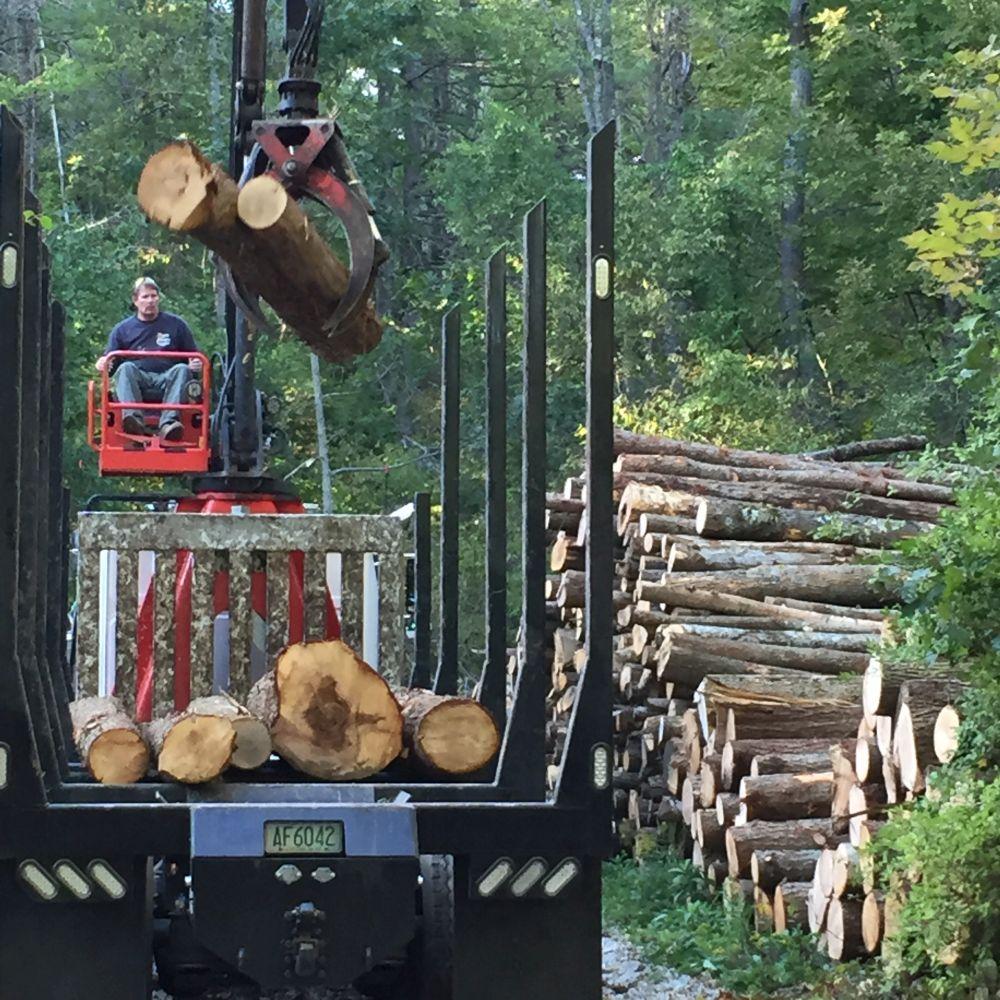
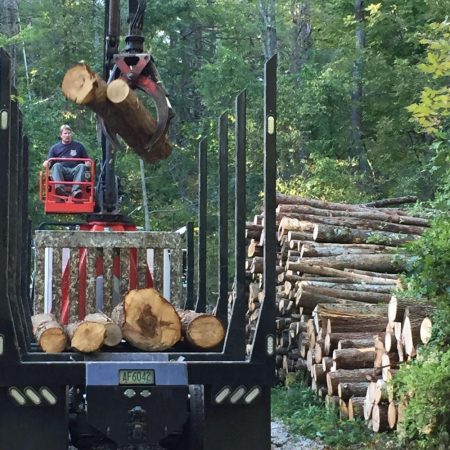
The tariffs on the bulk of the commodity lumber were at 14.5%, which consisted of anti-dumping and countervailing duties. In March, there was going to be a 25% increase to 39.5%, but it was delayed and exempted on April 4th. In August, there was increased tariff activity again, but it’s difficult to keep up with current rates, inclusions, and information. The Canadian government is supporting their domestic workers who are being impacted by the trade escalation. The cost of this commodity, framing lumber, is in the range of $500.00 – $600.00 per 1000 board feet, or .50 – .60 a board foot. Directly because of the Canadian lumber flowing into the US, and the lower cost of the Canadian materials, many mills, large and small, have gone out of business in the US. This equipment does not fare well when it’s not used and remains dormant. Presently, there is a serious shortage of loggers, truck drivers, mills, and mill operators. It’s a serious problem that will take many years and millions or billions of dollars to catch up. Our domestic mill capacity has a production shortfall of 3.2 billion board feet of lumber annually and requires the US to import 25 – 30% of its material to meet demand. A significant factor in our housing shortage and rising cost of purchasing a home. The shortage of skilled tradespeople, the shortage and cost of building materials, and the cost to borrow money will have a long-term impact on our housing market. I believe we will see an increase in modular construction where the majority of the building can be completed in a controlled environment. Think about the advantages for the tradespeople.
Although finding talented and skilled help continues to be challenging, we are fortunate that Monita Schimianski joined our team as our senior office manager in June, which has been a great addition. Marco DeVellis joined our team as general manager of architectural millwork in March and has been a great addition, and we are very fortunate to have Jeffrey Hollis join our drafting and engineering department this month. Jeff brings decades of experience and an in-depth understanding of our trade and technology. Jeff joins Marco, Rob Calderoni, and Brandon Lamprecht to manage our larger commercial and residential projects.
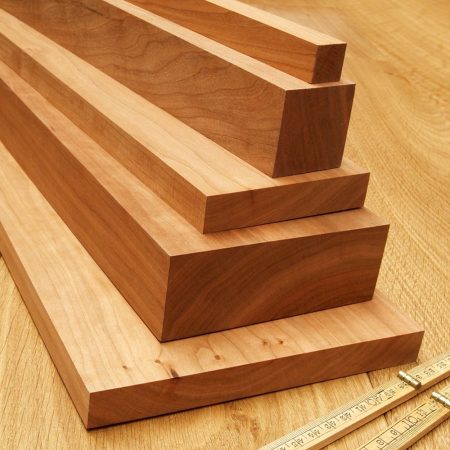
We continue to source beautiful wood through our normal channels as well as by purchasing private collections. Come in and see what we saw.
I look forward to seeing you at the shop,
Sincerely,
David Harris, President
Parkerville Wood Products, Inc.